

Introduction
It's interesting, that the concept of Scrum is often different when talking to Program Managers or upper management versus when talking to Scrum Masters or developers.
Why is this?
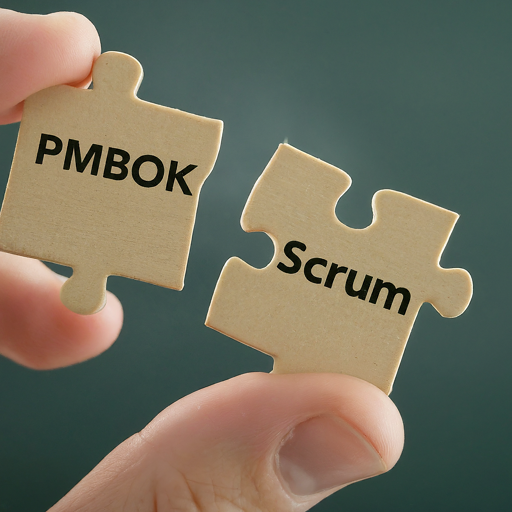
Much of this misalignment can be better understood when comparing the Scrum Guide (studied by a Scrum Master), and the Project Management Body of Knowledge (studied by a Project Manager). Scrum is often discussed in conjunction with the Project Management Body of Knowledge (PMBOK), but the way it is presented in the two resources aren't always aligned.
While both the PMBOK and the Scrum Guide provide guidance on project management, there are significant differences in their approaches to Scrum. This is why Project Managers and Scrum Masters are often misaligned in their approaches and expectations when implementing Scrum. It is also imperative to understand when communicating with different groups across the organization.
Key Differences
-
Framework vs. Guide:
- PMBOK: A comprehensive guide to the body of knowledge for project management. It provides a structured approach to project management with various methodologies, including Scrum.
- Scrum Guide: A concise document that specifically outlines the Scrum framework. It provides a detailed description of Scrum roles, events, artifacts, and rules. However, it intentionally leaves certain things open to be adapted, as the Scrum Master feels is best suited for their specific team.
-
Focus:
- PMBOK: Targeted towards a wider umbrella of management. Provides a broad overview of project management, encompassing various methodologies and techniques.
- Scrum Guide: Targeted towards the needs of a team. Solely focuses on the Scrum framework, providing a detailed guide for its implementation.
-
Approach to Scrum:
- PMBOK: Presents Scrum as one of many project management methodologies. It integrates Scrum concepts within its overall framework, however it presents Scrum as a much more rigid and risk-adverse process, without an emphasis on vital concepts in modern Scrum such as Sprint Goals.
- Scrum Guide: Defines Scrum as a distinct framework with its own set of rules and practices. It emphasizes the importance of self-organizing teams and empirical process control.
-
Level of Detail:
- PMBOK: Offers a more detailed and comprehensive approach to project management, covering various aspects such as risk management, quality management, and procurement.
- Scrum Guide: Provides a concise and focused guide to Scrum, emphasizing the core concepts and practices that are more beneficial to individual team success.
Key Similarities
Despite these differences, the PMBOK and the Scrum Guide share some key Similarities:
- Focus on delivering value: Both frameworks emphasize delivering value to stakeholders through iterative and incremental development.
- Importance of collaboration: Both frameworks highlight the importance of collaboration among team members and stakeholders.
- Use of empirical process control: Both frameworks utilize empirical process control, which involves inspection, adaptation, and transparency.
Summary
While the PMBOK and the Scrum Guide offer different perspectives on Scrum, they both provide valuable guidance for project management.
It is imperative that we understand the differences between these two guides, so that we can improve our communication between upper management, project managers, and development teams.
Understanding these differences can help practitioners choose the most appropriate approach for their specific projects and organizations. For those seeking a comprehensive overview of project management, the PMBOK may be more suitable. For those specifically interested in implementing Scrum, the Scrum Guide provides a detailed and focused guide.
Prefer to consume this information from a video?
This blog is available on my  channel as well!
A direct link to this blog's video can be found here.